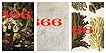
 2666: A Novel by Roberto Bolaño
My rating: 4 of 5 stars
Some briefs thoughts on Parts 1 and 2 of 2666 by Roberto Bolano
Recently, I was invited into a book club by some friends from work. The last book we read was the intimidatingly long 2666 by the late Roberto Bolano. What I know about Bolano is limited to these facts: He was Chilean. He really preferred writing poetry but began writing novels in order to support his family. He died in 2003 at the age of 50 and intended for each part to be published separately because he thought that it would support his children longer.
His final masterpiece (which I say because I think that is what he meant for it to be) is quite lengthy but separated into 3 books and 5 parts makes the read less of a daunting task. The parts are written with different voices and I like to think that the translation precisely captures that of Bolano since it read like the storytelling of a cold and distant yet ominous European man for four out of five parts. Part 5: The Part About Archimboldi had a lighter, more rhythmic tone. Part 4 was the longest and darkest but also the most clinical in its descriptions of the murder cases. It engaged me fully nonetheless.
Parts 1 and 2 are about people who obsess over specific writers. What Archimboldi wrote is inconsequential to us, the readers, but obviously it was life changing for the critics; life changing enough to lead them to search to search out the seventy year old German who went into hiding many years prior. In Part 1, the characters of the four critics appeared to be empty and emotionless. Although the Italian and Frenchman made themselves vulnerable by sleeping with the British woman, any feelings of love that they had for her felt insincere and were not revealed until the end of their part. The pair seemed to be okay with the situation (sharing a lover) until the end when they finally ask her to choose between them.
Books; writing, reading and publishing them; are a major, major theme of 2666. The stories do not actually take place within the publishing and academic worlds but dance more around them, exposing the habits, loves, and mental illnesses of those who live and work in these fields. A freethinking and lackadaisical approach to the European, academic life is apparent in the first part. The critics travel around the world for conferences mostly and then to Santa Teresa in search of Archimbaldi. Although their travel is often purposeful, they do it as though they are aimless-nomads and intercontinental wanderers. What struck me was that once in Santa Teresa they did not seem to be all too concerned with actually finding Archimboldi. The Frenchman just existed in the town. After some brief detective work he stopped searching, although he was still following the words of the writer and continued to reread his works in the hot sun of desert.
He and the other three critics were not trying to be successful writers in their own right. They were critics. They read and wrote about another people’s work. They should not have dedicated their energy to figuring out what another believed and stopped there. Rather, it would have served them better to find their own meaning by taking several sources, seeing which fit them best and then integrating that into their own personal belief systems. But they were followers – not living as creative, fluid beings. This stagnation lead to them become angry, making them dangerous, physical threats to a society that they were not trying to understand and live in peaceably. They lack meaning because Archimboldi cannot truly give it to themThey are worshiping someone else, someone else’s work like it is their religion. They are empty; searching outside of themselves and not coming up with any answers.
In Part 2, Amalfitano has his heart broken by his crazy wife who is trying to run away with a poet who has been committed to a mental institution. She visits him and insists that they once met at a party and had sex while other people watched. She is unsuccessful in running away with him and so wanders, sleeping around, and living off the charity of strangers. (This is similar to the critics trail of searching, giving up, and then aimless wandering.) Back home, Amalfitano goes a bit crazy himself. He performs an experiment by hanging a geometry book on a string outside of his apartment to see if it is changed or affected by the natural forces. In addition, he begins hearing (and talking to) a voice, which says it belongs to his grandfather or father. Even though he knows these experiences to be wildly absurd, he pursues them in his quest for his own personal truth. He does not listen to convention or blindly follow someone else and that is why Part 2 was my favorite.
The critics became obsessed with Archimboldi just as Amalfitano’s wife was obsessed with the mentally ill poet because of what they represented. They want to connect their identity and beliefs to the words written by others. They wanted to live the ideas in the books; the conclusions that that the writers came to after years of their own searching and writing. Instead of searching for the meaning, they searched for the writer, the artist, the creator. (Is Bolano saying that we should not search for our creator, but rather for our own meaning; the creation that we are capable of?)
Another theme in the first two parts is art. My favorite part of Part 1 is when the dead publisher’s wife talks at a dinner party about an artist. She said that his work made her laugh while it made her friend cry. The point being that people have different perspectives about a single piece of art and often opposing opinions of the meaning. Who is right? Who is wrong? Well, obviously no one is wrong. It is a lesson learned in grade school but often lost as we grow up. As adults seek their truth, they quickly close themselves off from other possible realities in order to have something to believe in; a belief to guide them when their sense of self, chosen occupation or religion fails to do so. Artwork is not created to teach a specific idea or to educate but is meant rather to express something or to bring a topic to light to get people form an opinion about something they may never have though about otherwise. Maybe this is what Bolano intended for his novels. Maybe he didn’t want to state his opinion on our culture’s obsession with fame or on the murders of Mexico but just to bring them up as they are to make us aware. This is certainly what he meant for the writings of the mentally ill poet and for Archimboldi’s stories but the critics and Amalfitano’s wife failed to form their own opinions and took the words as final truth.
View all my reviews >>


No comments:
Post a Comment